

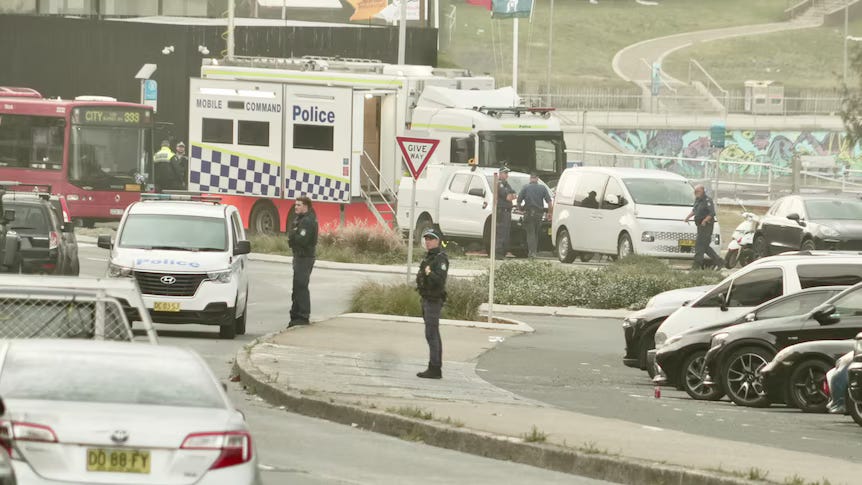
Following the tragic events of the shootings at Bondi Beach, which at the time of this article being written claimed the lives of 15 victims and injured a further 40, the Albanese government and various state leaders tabled a proposal to further tighten Australia’s already extremely tight gun control legislation.
But are gun homicides with registered firearms a major problem? Or is this a reflection of a knee jerk reaction from the political class?
Despite my strong views on this issue, I will avoid making further political commentary in this article and focus solely on the data.
Gun Homicides Overall
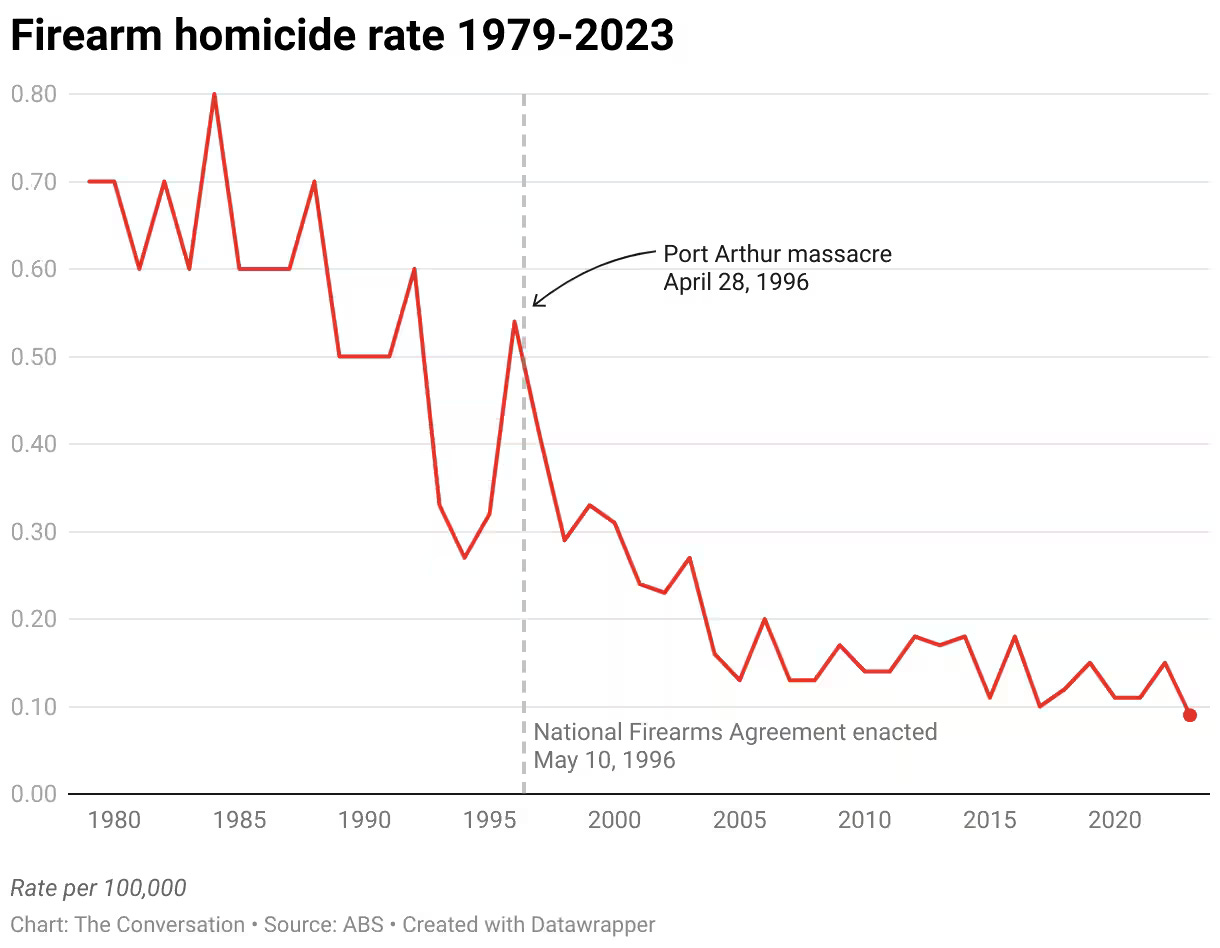
According to data from the ABS, as of 2023, Australia had less than 1 gun homicide per million people.
This figure had been trending down since hitting a peak in the data set of 8 gun homicides per million people in the early 1980s.
In the last data point prior to the Port Arthur Massacre, there were 3.2 gun homicides per million people.
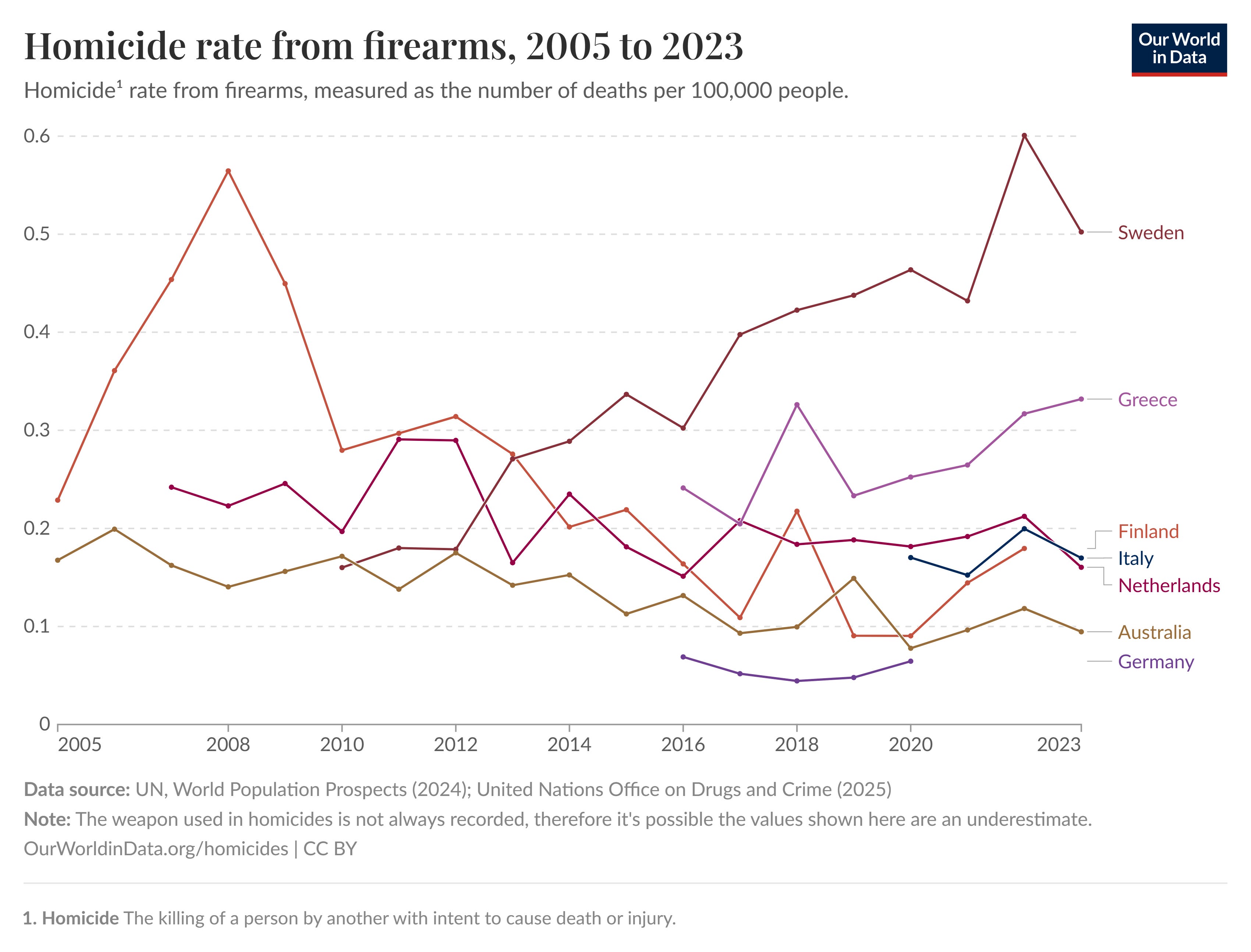
To put this into perspective, Australia has a firearm homicide rate is roughly in the middle of developed nations in Europe, despite being a much larger land mass with a sizable population in the regions having a genuine need for firearms.
Legal Firearms And Gun Homicides
This brings us to the crux of today’s issue, the level of gun homicides perpetrated with legally owned firearms.
For over a decade the Australian Institute of Criminology (AIC) has studied who commits gun homicides in Australia.
What they consistently found was the overwhelming majority of firearm homicides were perpetrated by individuals without a firearms license.
According to an analysis by Griffith University Senior Research Fellow Samara McPhedran:
“When the figures are averaged across several years of reports, almost nine out of every ten firearm homicides involved an unlicensed offender.”
“The reports also show that more than 90% of guns used to commit murder are not registered.”
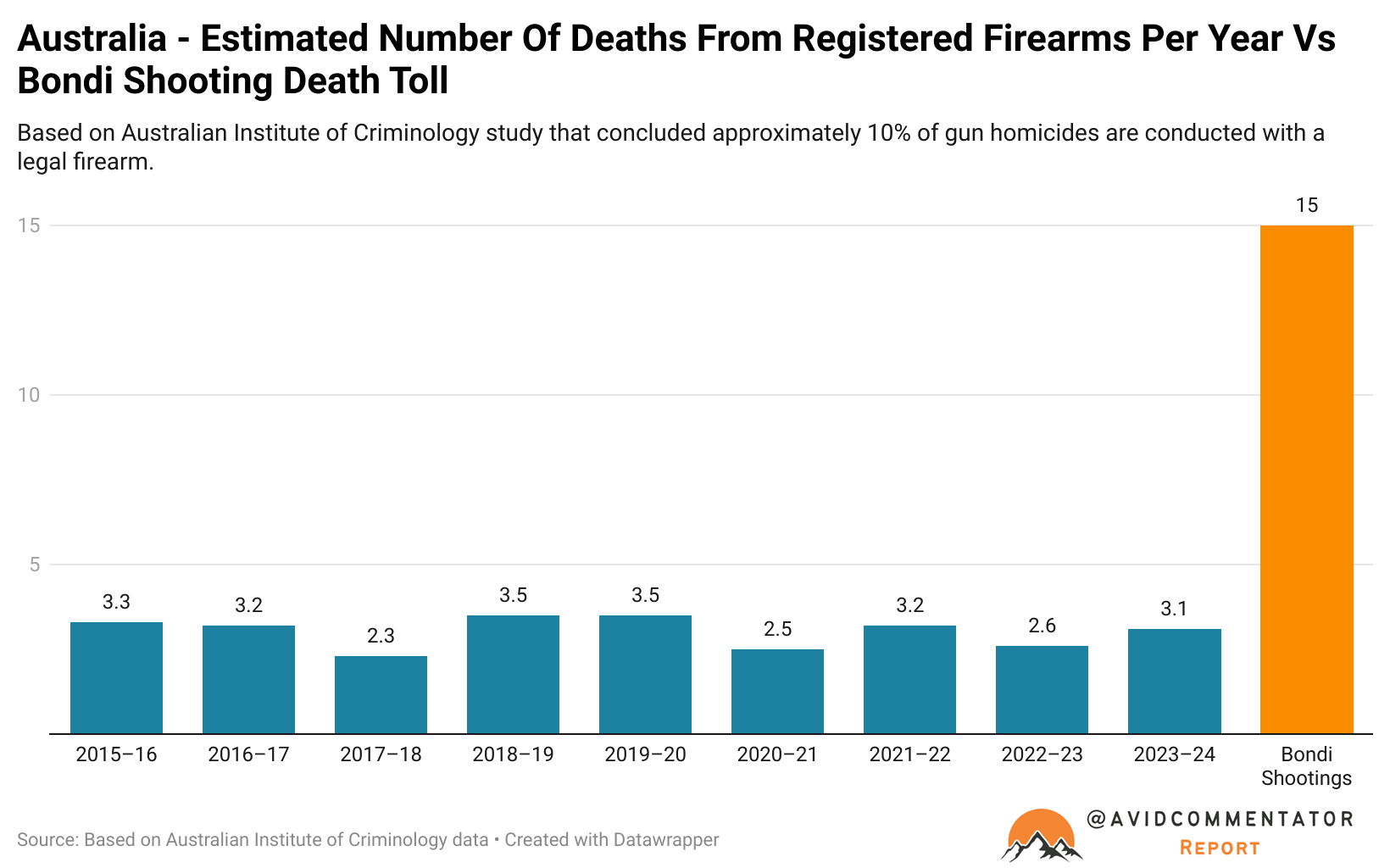
If we extrapolate that onto the AIC’s data for 2023-24 and assume that it continued to hold true, there would be 3.1 gun homicides with a legally owned firearm in that year.
If we take a step back and look at the latest five years of data as a whole, there have been 149 gun homicides in Australia.
If we extrapolate the AIC’s long term findings on to this data, we arrive at a figure of 14.9 firearm homicides conducted with a legally owned firearm.
In short, Naveed Akram and Sajid Akram killed just as many people on the fateful day at Bondi Beach with a set of legally owned firearms as every single Australian did in the five years prior to that.
Despite the relatively commonly held perception that more legally owned firearms in the community means more gun homicide, that is not the case in Australia.
According to the findings of Samara McPhedran:
“Police data show steady increases in the number of people licensed to own firearms as well as the number of firearms legally owned. But despite growing levels of gun ownership, there have been ongoing declines in firearm homicides in Australia. The downward trend emerged in the 1970s and has continued to the present.
This suggests that, in Australia, more guns do not mean more gun-related murders. And firearm suicides, which account for most firearm-related deaths in Australia, have also continued to fall.”
The Takeaway
Over the last 50 years a combination of changing Australian culture and later gun control legislation has helped to deliver a dramatic reduction in firearm homicides.
While there are somewhere between 260,000 and 6,000,000 illegal firearms out there, Australia’s gun control legislation and law enforcement has created a set of circumstances where using an illegal firearm in a crime can have an immediate and serious cost, not only for the offender but for the individuals who provided them with the firearm to begin with.
This is a success that Australians should be proud of and that nations that face major issues with gun crime should be attempting to replicate, not something that policymakers should be deriding.
There is certainly more that law enforcement and intelligence services can do to keep firearms out of the hands of terrorists, but this is largely a separate issue to broader gun control legislation which has been effective.
— If you would like to help support my work by making a one off donation that would be much appreciated, you can do so via Paypal here or via Buy me a coffee.

If you would like to support my work on an ongoing basis, you can do so by subscribing to my Substack or via Paypal here
Thank you for your readership.
Thank you Tarric, unfortunately the politicians will most likely not listen to reason and enforce more draconian policies 😣