
China and the war in Iran - The Oil Factor
Not as bad as you might think?

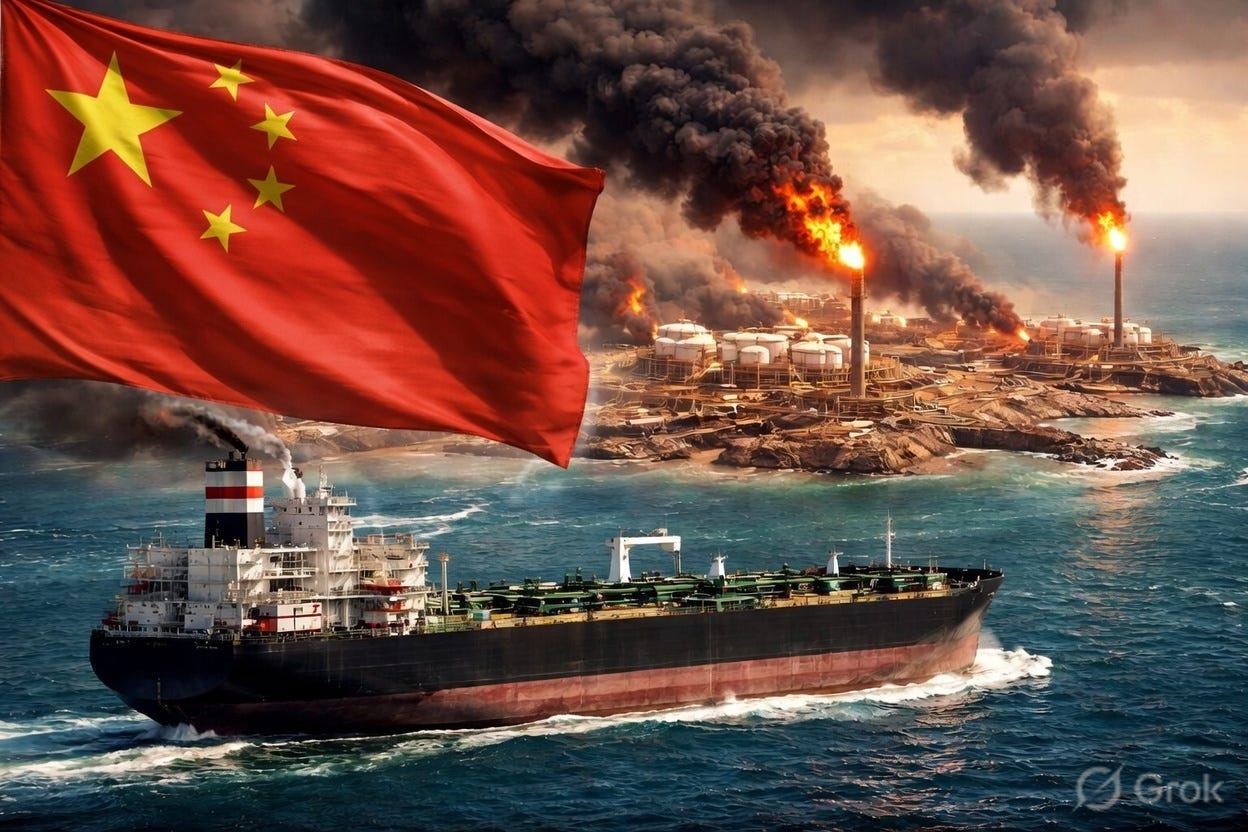
As most of the world attempts to come to grips with the new reality of the largest interruption to global oil supplies in history, much of the focus has been placed on China, which is on paper the largest recipient of flows of oil through the Strait of Hormuz.
According to figures from the EIA, China imports 5.35 million barrels of crude oil through the Strait of Hormuz every day, significantly more than second place India with 2.09 million barrels per day.
While the Middle Kingdom has strategic reserves amounting to approximately 1.3 billion barrels of oil, condensates and fuel stockpiled, worth up to 140 days worth of net imports, the closure of the Strait of Hormuz to maritime trade would in time become a major issue for China.
But this is the thing, it isn’t closed to Iranian tankers.
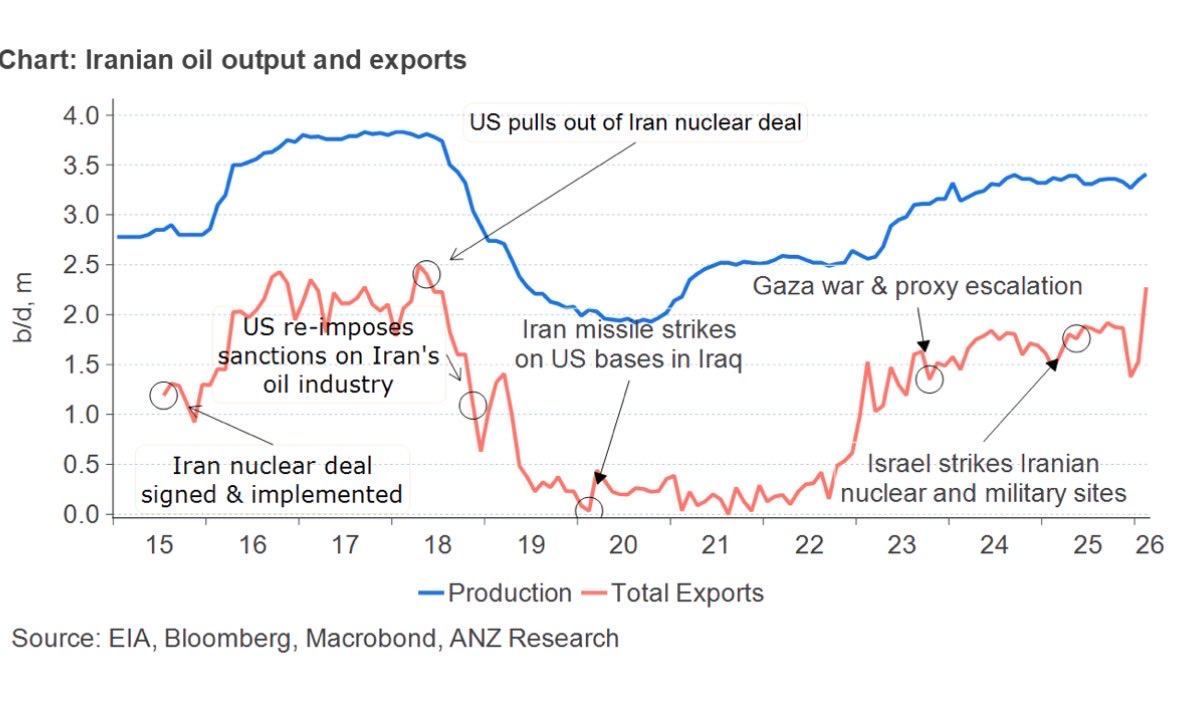
According to data from Kpler and reported by the Wall Street Journal, total Iranian exports have recently risen from to 2.1 million barrels per day.
Figures from a recent ANZ report circulated on social media suggests that exports may be even greater than that.
S&P Global concluded in early March that 100% of oil being exported from Iran was currently being shipped to China.
So instead of being down 5.35 million barrels per day, China is actually down to roughly 3.25 million barrels per day.
And the news get’s better for the Middle Kingdom.
Two of it’s largest import sources, Saudi Arabia and the United Arab Emirates both have pipeline infrastructure capable of delivering crude to ports outside the Strait of Hormuz.
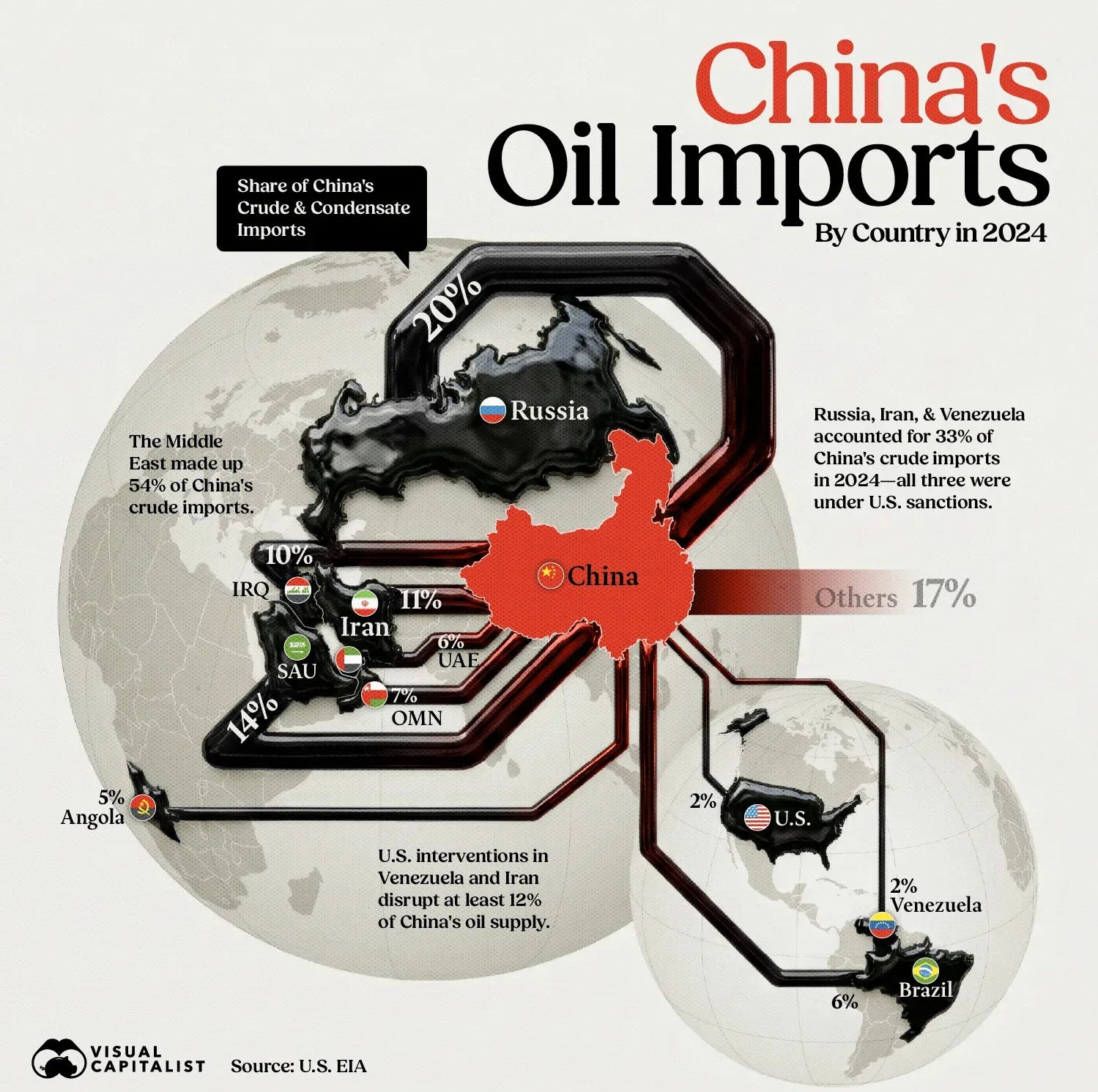
Chart: Visual Capitalist
The East-West Pipeline (EWP) in Saudi Arabia is currently reportedly running at a rate of approximately 4.8 million barrels per day.
Based on the rate of exports from the Saudi General Authority for Statistics (GSTAT) for that year, it equates to capacity of approximately 78.7% of 2024’s export volumes to be maintained at that level.
Theoretically the EWP is reportedly capable of flowing up to 7 million barrels per day, but whether that level of flow will be achieved is unclear.
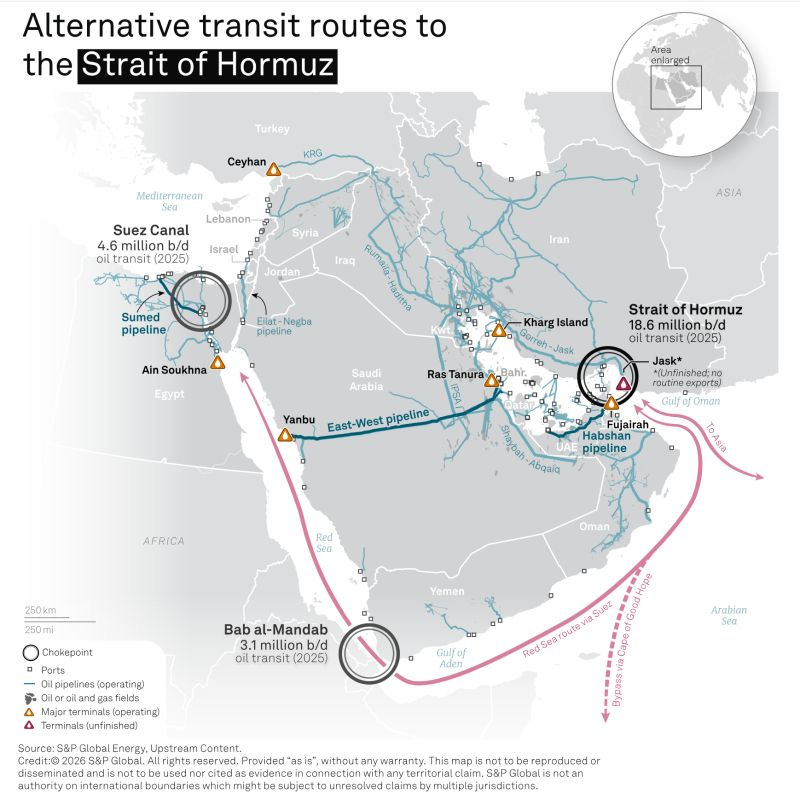
Meanwhile, in the UAE, the Abu Dhabi Crude Oil Pipeline (ADCOP) is capable of moving 1.5 million barrels a day to the export terminal at Fujairah in the Gulf of Oman.
According to a recent analysis from Goldman Sachs, it is currently operating at approximately this capacity.
This equates to capacity to reroute exports around the Strait of Hormuz of approximately 54.5% of current total exports.
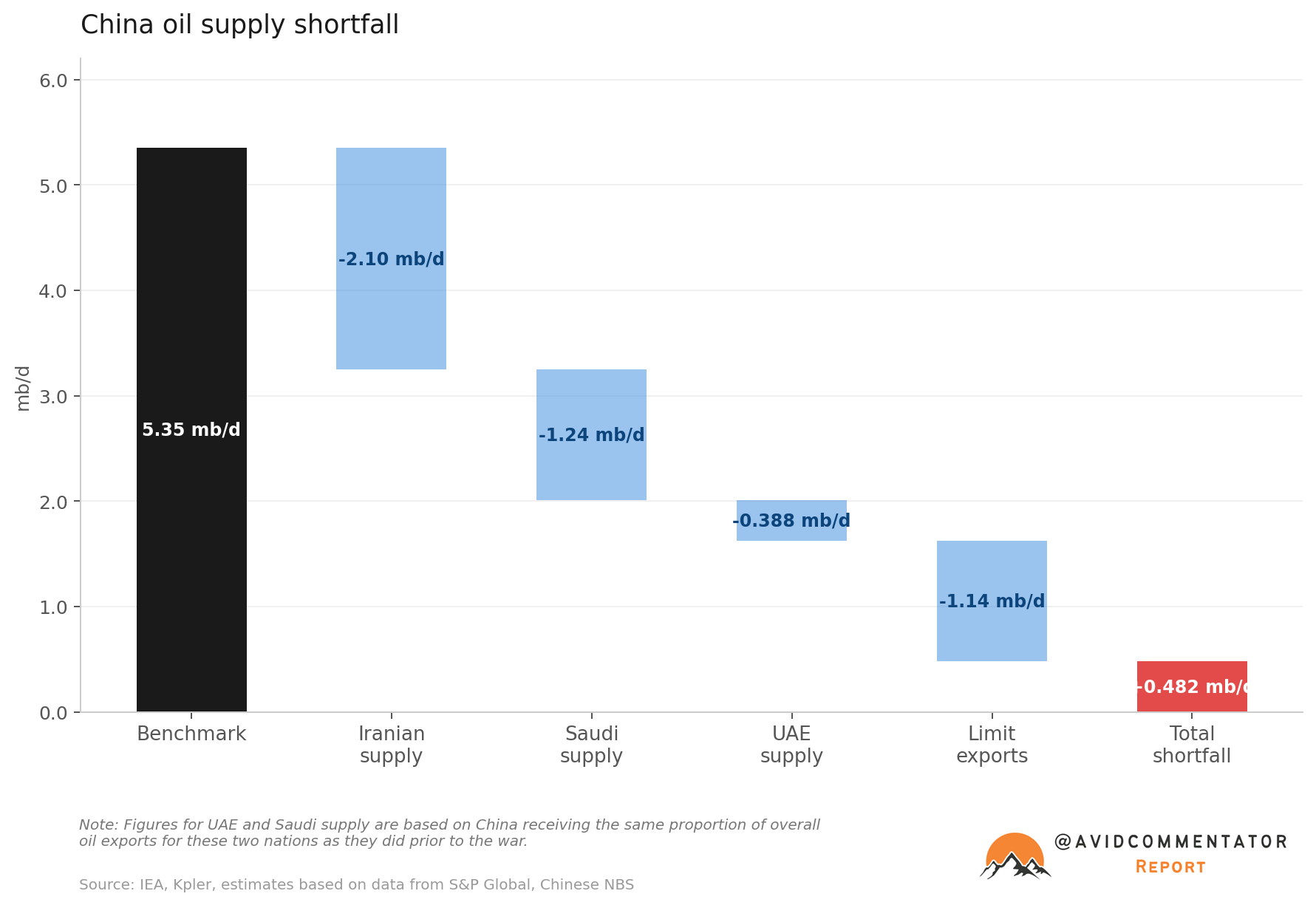
If we assume that oil exports from Saudi Arabia and the UAE are distributed evenly among existing customers (which is an enormous if), this would provide China with roughly 1.24 million barrels per day from the Saudi’s and 388,000 barrels per day from the UAE.
Overall, this comes to 1.63 million barrels of additional supply, reducing China’s shortfall in crude imports to 1.52 million barrels
If Iran is capable of ramping up exports through the relatively new terminal outside of the Strait of Hormuz at Jask on the Gulf of Oman, there is theoretically scope for potentially another 500,000 barrels a day in exports to China by some estimates.
According to the 2024 BP Statistical Review, China exported approximately 1.14 million barrels per day of petroleum products, with the recipients by weight of value illustrated in the graph below.
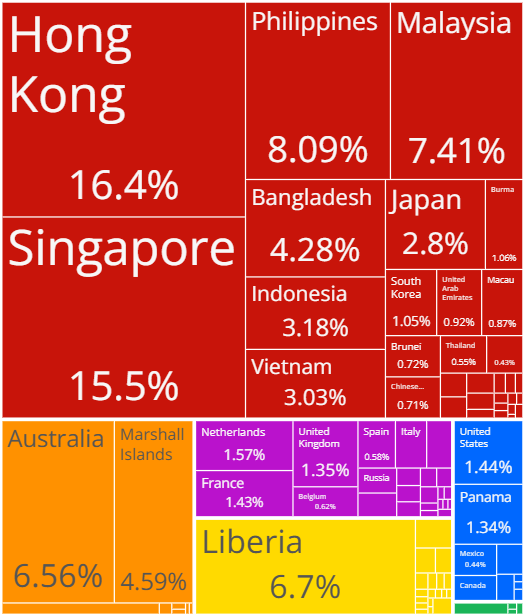
Source: OEC
Put the Chinese export ban together with the aforementioned factors including continued Iranian exports that are higher now than pre-war and the ability to get existing contracted supplies rerouted to other ports, China’s shortfall of crude imports required for domestic consumption theoretically comes to under 500,000 barrels per day.
It’s a challenging and deeply inconvenient set of circumstances for China, but purely from the perspective of crude oil, it’s not an entirely unsustainable scenario.
If Beijing wanted to maintain the status quo in terms of domestic oil supplies, it could do some relatively minor releases of reserves and maintain that in a vacuum for the best part of a decade.
Broader Implications
While the current circumstances are far better for China than it is for most it’s rivals in Asia, for the U.S it comes with geopolitical risks.
With the surge in exports and oil prices, Iran’s tanker fleet is now delivering significantly more cash to Tehran than it was prior to the war.
But if the U.S was to remove those tankers from the board and thereby the flow of up to a billion dollars a week to Tehran, it would remove the last thing keeping the current circumstances regarding oil supply a deeply inconvenient scenario for Beijing but not a full blown crisis.
To say that may agitate an already frustrated Beijing would be an understatement.
The Takeaway
Looking at the issue of the closure of the Strait of Hormuz to a majority of maritime trade, a surprisingly decent picture emerges from the perspective of the Middle Kingdom when viewed solely through the lens of oil supplies, much better than the headline flows of oil through the strait would imply.
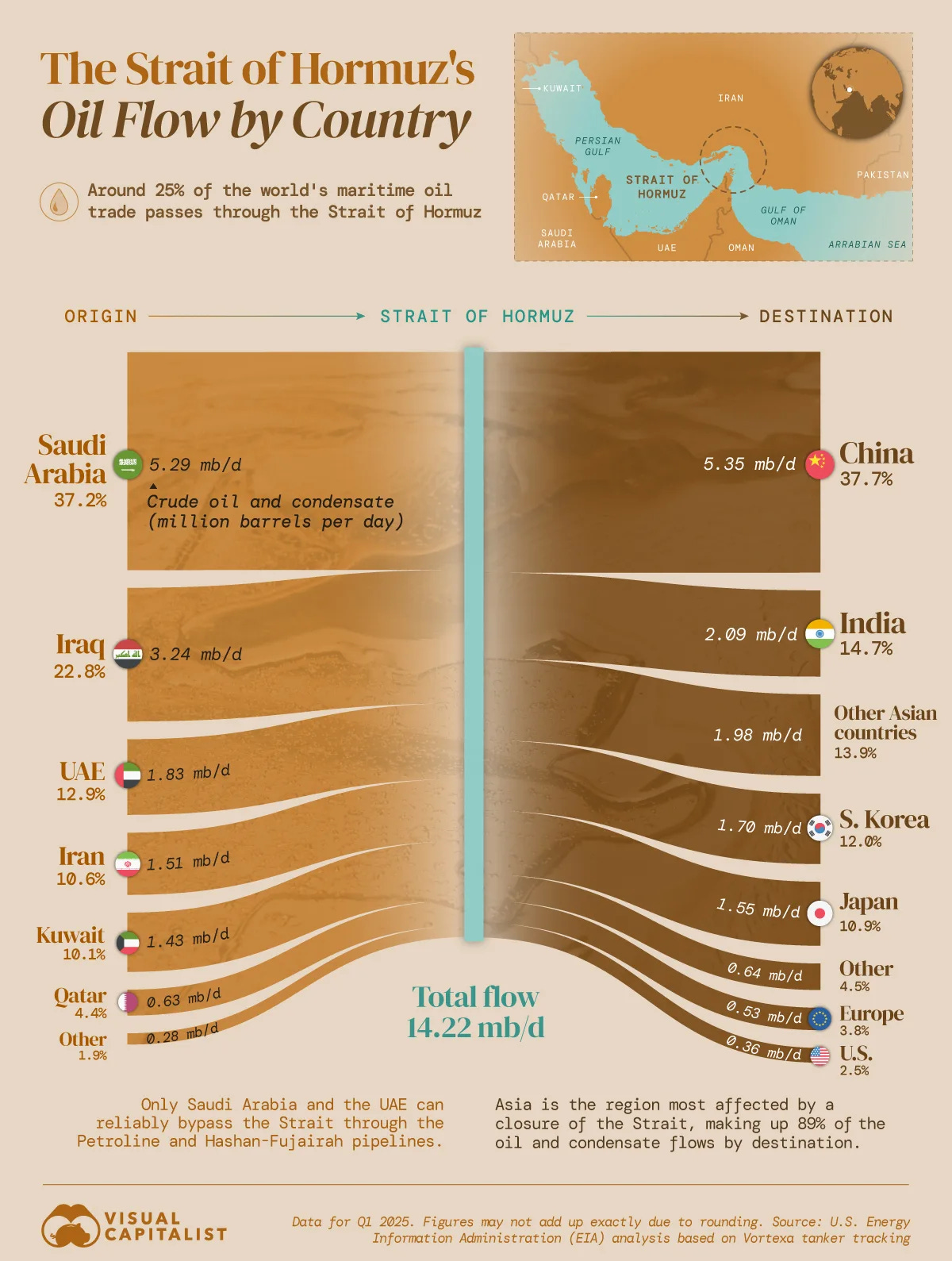
Chart: Visual Capitalist
Between the impact of rerouting of existing export contracts through pipeline infrastructure and even greater flows of sanctioned Iranian crude than pre-war, it’s a surprisingly manageable situation in a vacuum.
While one can only speculate, this may be playing a role in so far staying Beijing’s hand from a more forceful diplomatic response toward both Iran and the United States.
But this is only one aspect of the picture.
There are also supply chain issues on everything from sulphur to produce fertilizer to helium for manufacturing computer chips.
But in all this turmoil there is a silver lining for Beijing, the United States is currently doing significant damage to its relations with nation’s throughout Asia, some of which will soon face a deeply challenging energy crisis.
Last week it was reported that Beijing had agreed that it would not limit fertiliser exports to the Philippines, despite the fact that China itself will in time face challenges with supply should the crisis persist for long enough.
Like with so many other commodities China has a sizable reserve of fertiliser, although details of exactly how large is kept under wraps.
The current status quo is also doing significant damage to America’s standing in the region.
According to a poll conducted by The Asahi Shimbun on March 14-15 of the Japanese electorate, 82% of people do not support the U.S attack on Iran, with only 9% supporting the actions of the Americans.
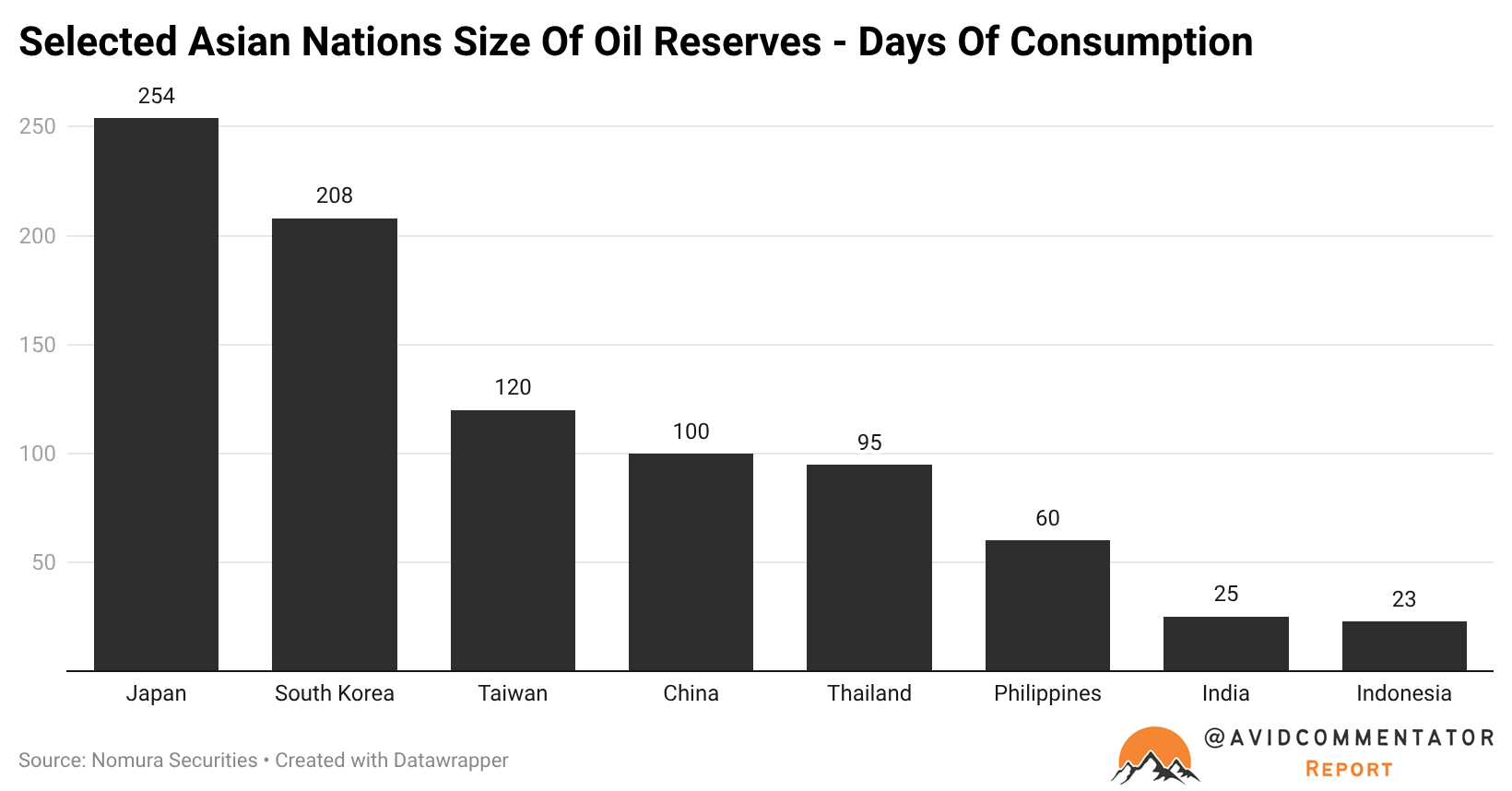
With Japan a close ally of the U.S and in possession of one of the largest oil reserves in the world relative to consumption levels, it’s not challenging to imagine that people in other parts Asia who will suffer from an energy crisis in the coming weeks will have a similarly disapproving perspective on the actions of the United States.
While in time a protracted closure of the Strait of Hormuz would morph into something akin to 1973 style crisis, in the meantime it may hold opportunity for China.
Ultimately, even though the hit to China is smaller than one might imagine and the new status quo holds a significant silver lining, Beijing’s patience will not be infinite.
— If you would like to help support my work by making a one off donation that would be much appreciated, you can do so via Paypal here or via Buy me a coffee.

If you would like to support my work on an ongoing basis, you can do so by subscribing to my Substack or via Paypal here
Thank you for your readership.