
The Magical World Of Costing The Impact Of Migration
Millions more migrants? $0 for extra transport infrastructure.


In a recent article in ‘The Age’, the latest costings from the independent Parliamentary Budget Office on the impact of changes to the migration intake from the baseline were shared.
This led the author of the article to conclude that:
“Any cuts to Australia’s overseas migration intake will cost the federal budget’s bottom line and plunge the country into deeper debt, complicating the equation for political parties as they promise to significantly slow the flow of immigrants into the country.”
On the other hand higher than baseline migration at a level 40,000 people per year was painted as a major positive.
“Fresh costings released by the independent Parliamentary Budget Office on Tuesday show the budget’s underlying cash balance would improve by $80.6 billion in a decade if the annual migrant intake increased by 40,000 more people than current assumptions.”
But is this actually correct?
This is one of those instances where I can say right from the get go that it’s an unequivocal no.
This is thanks to the fact that the Parliamentary Budget Office allows public access to its ‘Build Your Own Budget’ tool and it provides a line by line impact of whatever changes you would like to make based on their list of chosen variables.
One of those variables that can be amended is the rate of net overseas migration.
If you are so inclined it can provide an interesting, but ultimately at times deeply flawed view of changes to the budget.
First things first, the baseline levels of net migration in the tool are as follows:
2026-27: 245,000
2027-28 to 2029-30: 225,000
2030-31 to 2036-37: 235,000
For the purposes of today’s analysis, Norway has been chosen, as its often put forward as a shining beacon of desirable settings for a country and that its per capita migration settings are slightly above the developed world average.
If we extrapolate Norway’s current rate of migration on to Australia’s population, it comes to approximately 112,000 people per year.
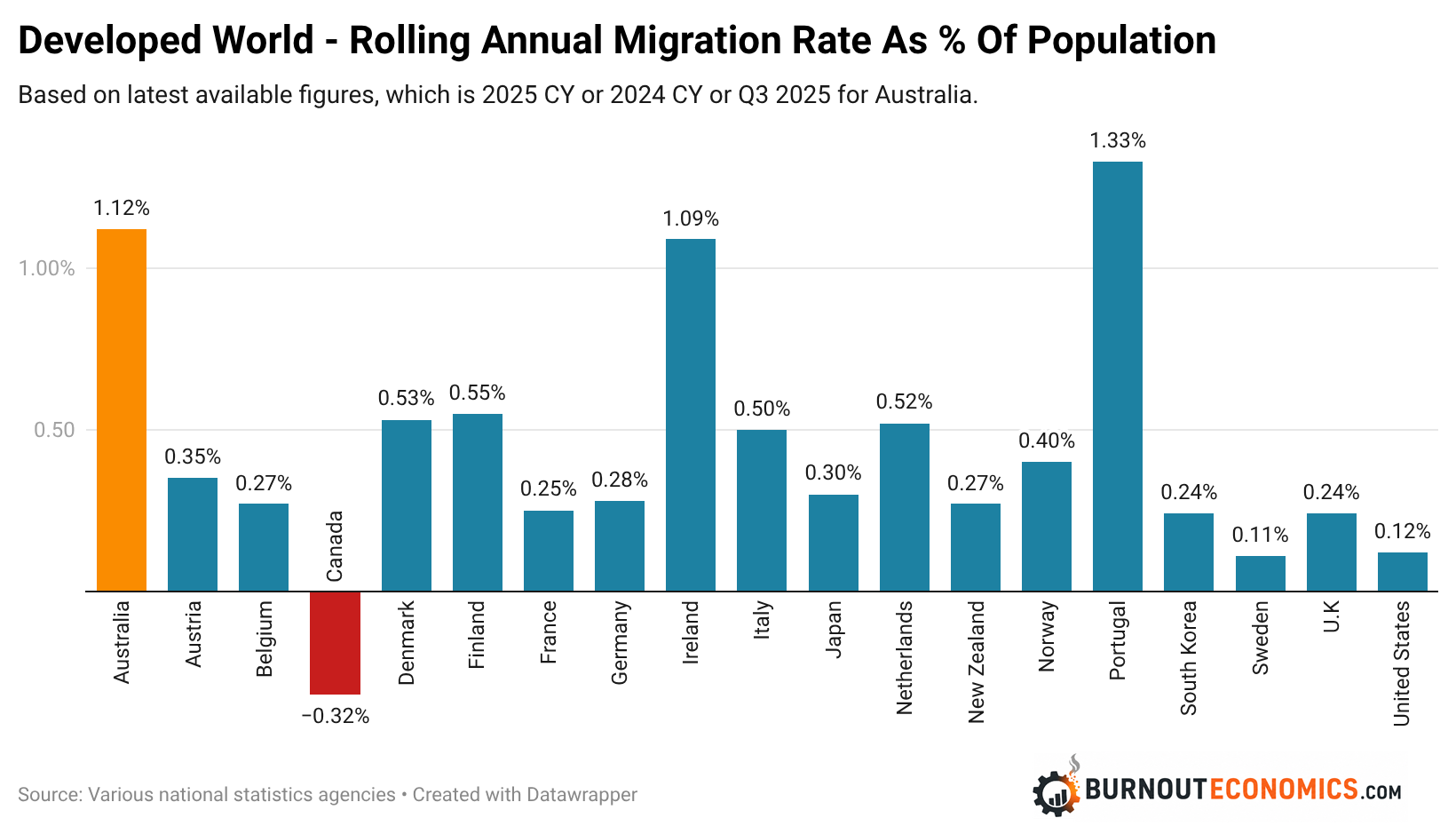
This is the figure we will be using across the entire range of the forward estimates out to 2036-37.
Over the course of this period, the PBO tool estimates it would cost the government $270.8 billion in net terms to the federal budget.
Of that $236.3 billion would stem from lost personal income tax revenue, $53.9 billion from corporate tax revenue and $39.5 billion from GST revenue.
It’s here that we look into the expenditure side of things and it all starts to become more than a bit strange.
Infrastructure Costs
Over the course of the estimated period, Australia would have a population of 1.33 million fewer people, so one would think that this would result in less transport infrastructure needing to be built.
After all as this now somewhat old Australia Institute graphic illustrates, an additional 1.33 million people would be roughly three Canberra’s worth of required infrastructure.
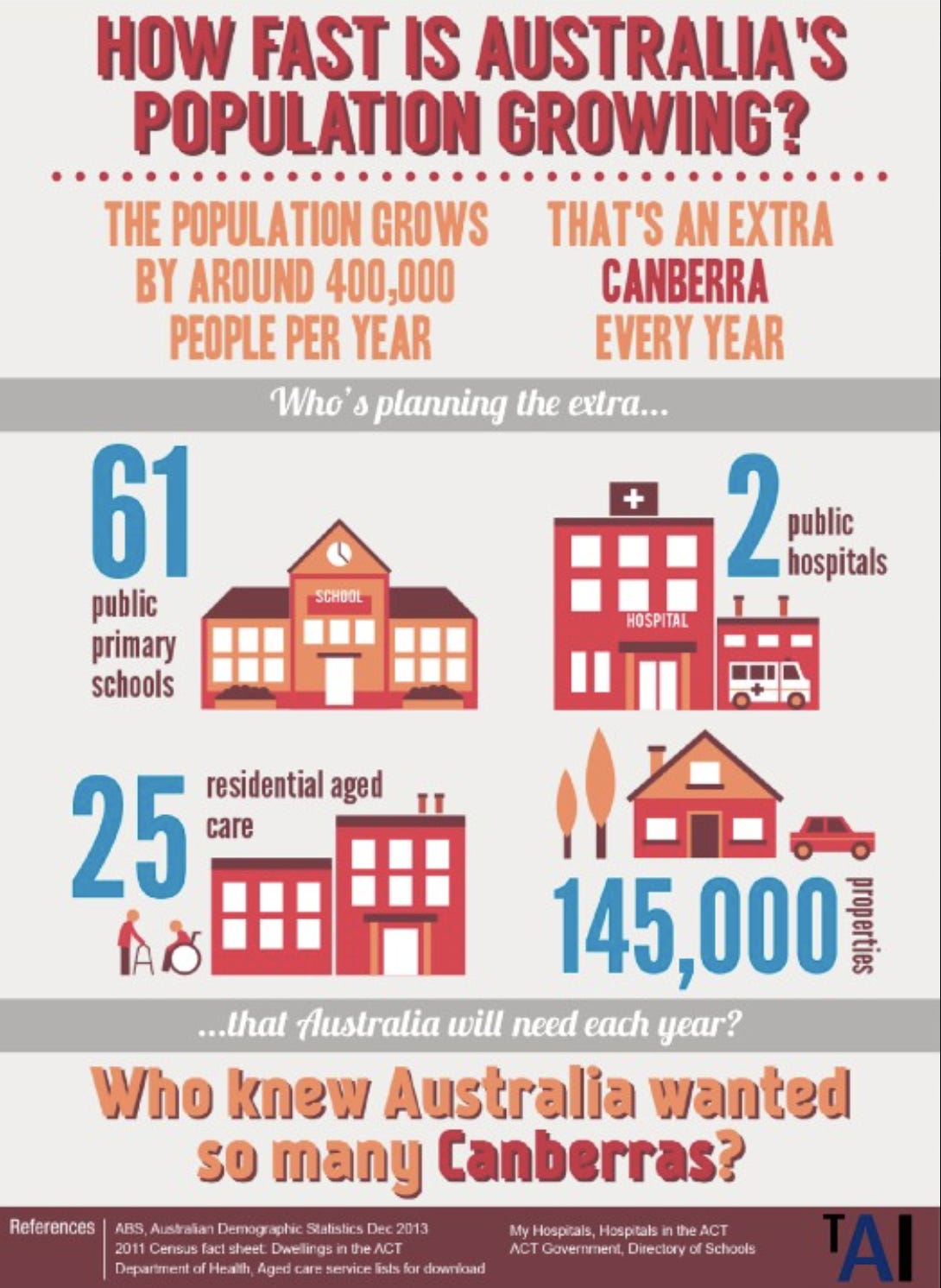
Source: The Australia Institute
The figure the PBO’s budget tool assigns as a saving for transport infrastructure and non-education/health related grants to the states? $0
So let’s flip the script for the moment and change the settings, instead choosing a migration intake of 500,000 per year out to 2036-37.
The total additional cost for the transport infrastructure to service the more than 2.9 million additional people who would call Australia home compared with the baseline? $0.
Keep reading with a 7-day free trial
Subscribe to Burnout Economics to keep reading this post and get 7 days of free access to the full post archives.