
Trump's Naval Coalition Can't Unlock Hormuz
Logistical reality trump's rhetoric

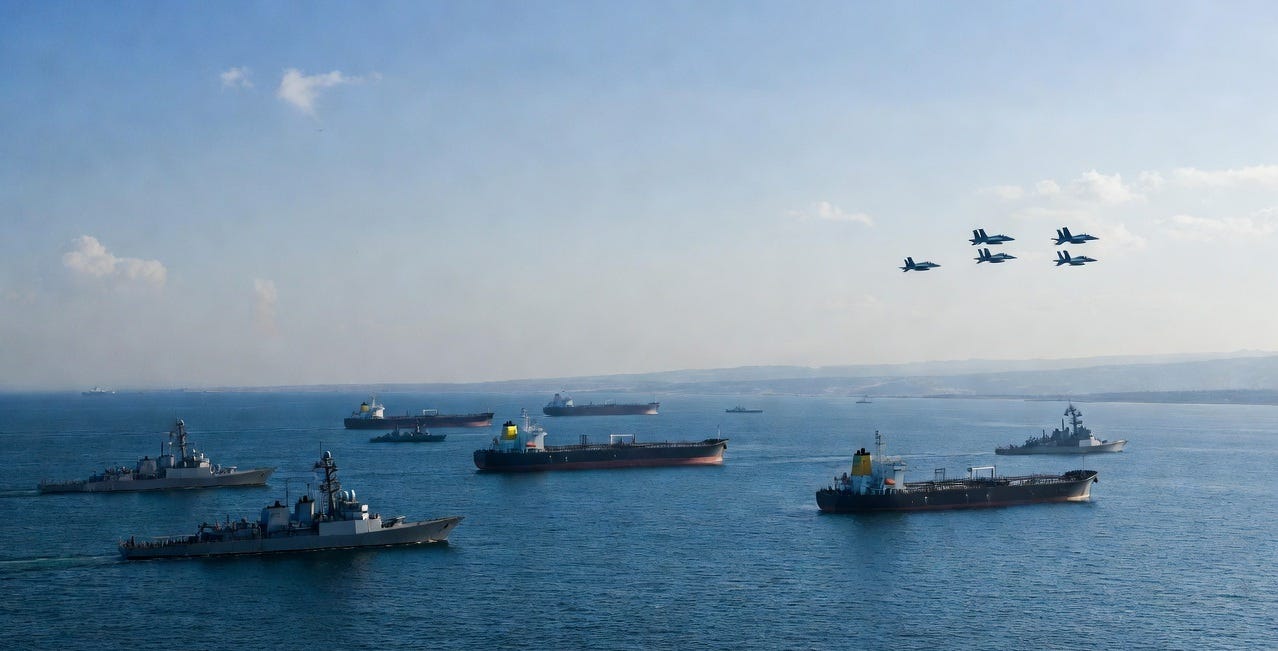
In recent days much of the hopes to fully reopen the Strait of Hormuz to maritime trade has rested on the notion of U.S President Donald Trump building a coalition to escort civilian shipping through the strait.
Trump has quested assistance from both friend and rival alike, asking for warships to be sent to run escort missions to secure passage through the strait.
So far Trump’s push for help has largely fallen on deaf ears.
The Albanese government in Australia has declined to provide ships for the effort.
“But we won’t be sending a ship to the Strait of Hormuz. We know how incredibly important that is. That’s not something that we’ve been asked or we’re contributing.” said Transport Minister Catherine King on Monday
But perhaps the greatest blow has come in the form of the Japanese government of Sanae Takaichi largely pouring cold water on the plans, noting legal and constitutional issues in deploying the Japanese Navy for such a mission.
The Japanese government did however note that other more peaceful operations such as mine clearance would be a different matter.
As the holder of the 3rd most powerful and capable surface naval fleet in the world, securing Japan’s help would have dramatically increased the number of capable escorts in the theater.
Looking at the issue from a high level Japanese perspective, they arguably see an entirely open ended commitment, the possibility of mission creep and the degradation of it’s active fleet’s capabilities through the expenditure of munitions and the required of maintenance and downtime after a protracted deployment.
But there is more to it than that for Japan and other potential allies, running escort simply isn’t going to be enough to reopen the Strait of Hormuz to the full pre-war volumes of traffic by itself.
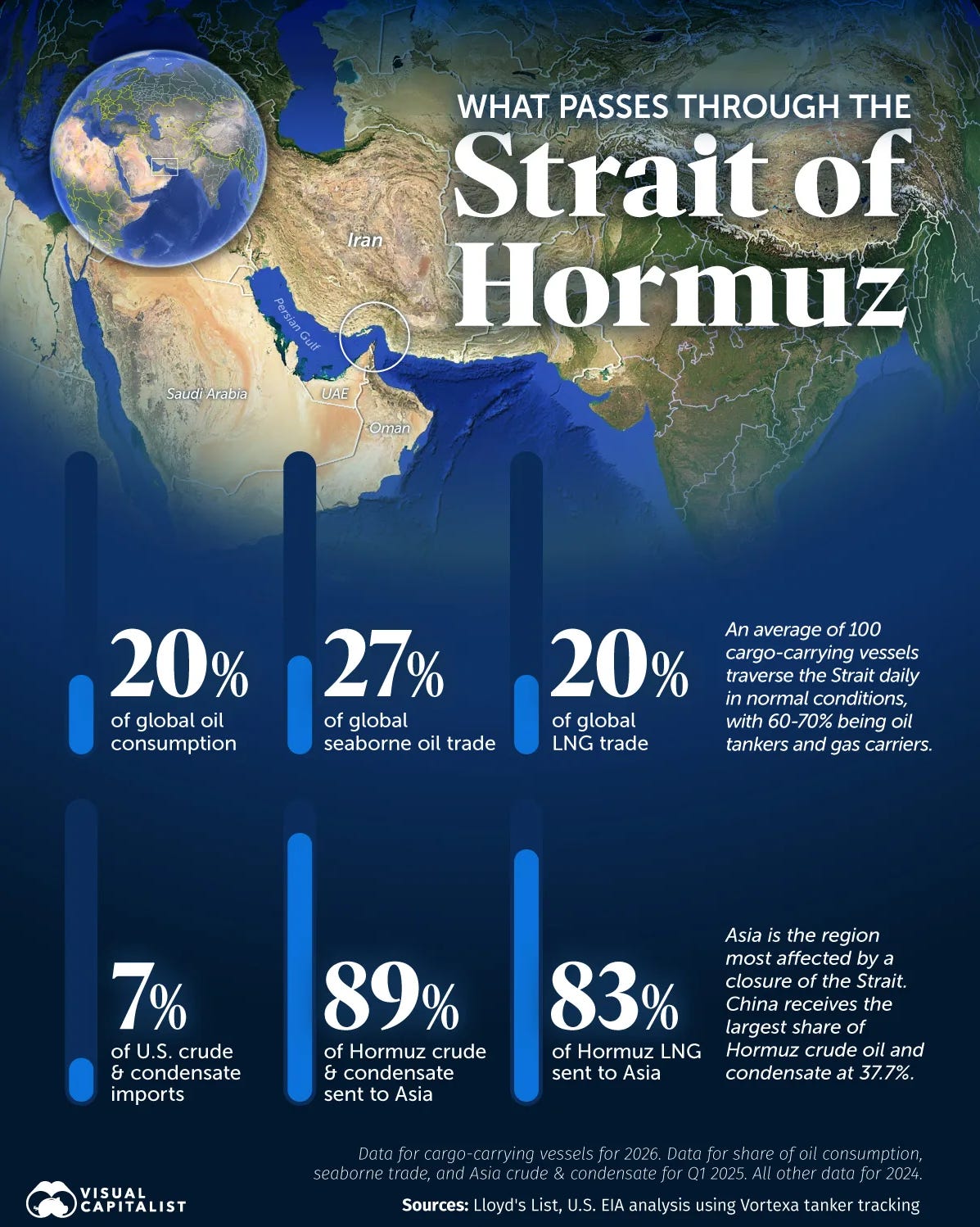
Source: Visual Capitalist
According to Lloyd’s List Intelligence, which is connected to the famous naval insurer Lloyd’s of London, the best case scenario put forward by eight naval security experts suggests that under 10% of normal tanker flows could be restored using the current in theatre capabilities of the U.S Navy to escort tankers through the strait.
This represents just 4-5 tankers per day, instead of the normal 45 to 50 and doesn’t cover the long list of other traffic transiting the Strait of Hormuz, such as bulk carriers, LNG carriers and other cargo ships.
Estimates vary, but the consensus across eight well-placed security experts from both naval and commercial operations indicate that a best-case scenario would see just under 10% of the normal flow of 45-50 tankers daily transiting the Strait of Hormuz.
There are also geographical constraints to consider.
“We’re obviously not looking at Second World War Atlantic convoy sizes, because you’re operating in very constrained waters,” stated Mike Plunket, senior naval platforms analyst at Janes Intelligence.
“You simply can’t fit 30 tankers through at the same time, and you don’t have enough escorts available to protect them all, so I would say four or five tankers with maybe two or three escorts would be what you were looking at.”
The dimensions of the strait and the required size of the convoys would also make it “difficult” to run convoy’s through the strait in both directions, so it would arguably require the strait to constantly have one way traffic, switching from one direction to the other as convoy’s safely passed through.
The Lloyd’s list analysis also warned of the impact of the strait potentially being mined.
“The Iranians have a wide selection of mines of varying levels of sophistication available to them, and they only have to sow a few in in the Middle East Gulf or in the strait and we would have to assume the whole thing’s a minefield. It only takes one mine being found, or one ship hitting a mine and then everything stops,” said Plunket.
This is even more problematic today than it would have been this time last year.
This time last year the U.S Navy had four purpose built Avenger-class minesweepers in the region ready to spring into action if required.
Today, they are tied up at the Philadelphia Navy Yard awaiting their fate.
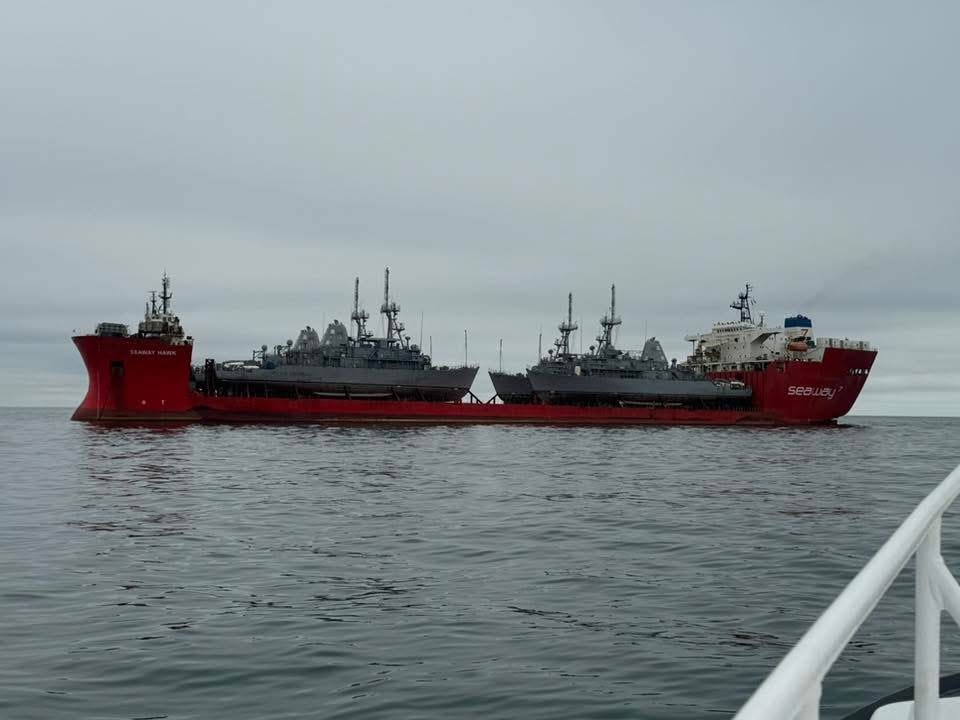
Source: Warship Cam
The Avenger-class were non-metallic hulled purpose built mine hunting vessels, perfect for a scenario where Iran mined the strait.
In reality what America has is just four purpose built mine countermeasures vessels in its fleet to fill the gap.
There were three other vessels with specialized mine countermeasure equipment aboard previously in the region, but not purpose built for the task, but two of these recently retired to the port of Penang in Malaysia.
There is also a fourth vessel currently reportedly underway to the region.
The Takeaway
If we take a step back and take in a broad overview the situation, we are confronted with a situation where no reasonable amount of warships from allied navy’s would be enough to fully reopen the Strait of Hormuz, even if those allies were so inclined to commit their forces at this stage of the conflict.
Meanwhile, the U.S Navy continues to remain reticent on doing it’s own escort missions through the strait:
According to sources who spoke to Reuters, the U.S Navy has continued to state during briefings for shipping and oil industry figures that it is unable to provide escorts at this stage.
One of the sources said that the U.S Navy’s assessment has not changed and that escorts would only be possible once the risk of attack was reduced.
Eventually the Strait of Hormuz will be fully reopened to maritime trade, but when that will come to pass remains deeply uncertain and the more time passes the greater the damage will be to the global economy will be and the higher the risks that we could see deeply damaging second order effects.
— If you would like to help support my work by making a one off donation that would be much appreciated, you can do so via Paypal here or via Buy me a coffee.

If you would like to support my work on an ongoing basis, you can do so by subscribing to my Substack or via Paypal here
Thank you for your readership.
The Gallipoli campaign showed the asymmetric benefits of mining.
Thanks for your clarity (and the surprising breadth of your analyses). Please stand for parliament, ideally in Grayndler.